Space & Weight: The RV Storage Reality Nobody Warns You About
Nearly 4,000 sq ft at home. 400 sq ft on the road. We split our time between both — and that 90% reduction every time we pull out of the driveway teaches you fast what actually matters.

Space & Weight: The RV Storage Reality Nobody Warns You About
Let's put this in perspective first.
Our home is just under 4,000 square feet. Three-car garage. Closets you can actually walk into. A kitchen with enough room to own a Margaritaville machine and barely notice it's there.
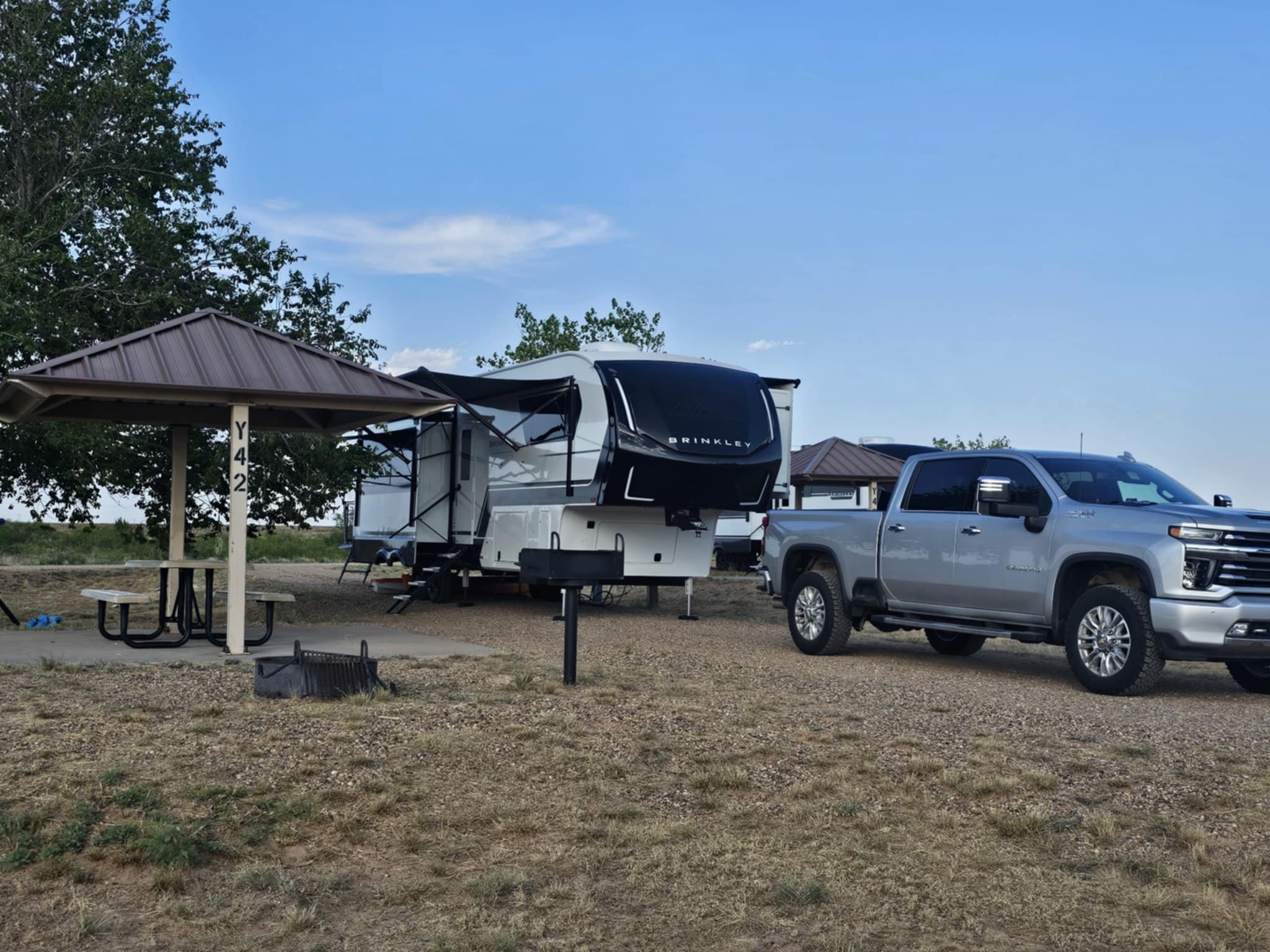
The Brinkley Z3400 is 40 feet long and roughly 400 square feet of living space.
We spend somewhere between 50 and 60 percent of the year on the road — not full-timers, not weekend warriors, but something in between that doesn't have a clean label. Call it serious nomads. Call it a split life. Whatever it is, we've chosen it deliberately, and we wouldn't trade it.
But that math — 4,000 square feet at home, 400 on the road — is a 90% reduction every time we pull out of the driveway. And nobody fully prepares you for what that feels like the first time you're standing in the driveway trying to decide which 10% of your life makes the cut.
In an RV, everything you own costs you twice. First, you pay for it in dollars. Then you pay for it again — every single day — in space and weight. Those two resources are the most valuable things in a rig, and they are always in short supply. The sooner you accept that, the better your life on the road gets.
We have been doing this long enough to have made every mistake in the book. We have hauled things we never touched. We have fought over things that weren't worth the argument. We have had the Margaritaville machine conversation. And we have slowly, trip by trip, gotten better at the math.
Here is what we have actually learned.
The "Parts Store" Problem
If you have ever worked on anything mechanical, you know the feeling. You fix something, you have leftover parts. You buy something just in case. You pick up a spare at the hardware store because it was cheap and you might need it someday.
In a house, this becomes a drawer. In a garage, it becomes a shelf. In an RV, it becomes a problem.
We had a collection of spare parts and tools that would have made a small auto parts store jealous. Fittings, connectors, bolts, specialty tools for things we had fixed once and might never need to fix again. The logic was sound — if something breaks on the road, you need it now, not after a 40-mile drive to the nearest hardware store.
The reality is that most of it never got touched. And all of it was taking up space and adding weight on every single mile we drove.
We still carry a reasonable toolkit and a curated set of spares for the things most likely to fail on the Z3400. But the "just in case" collection? That lives in the garage at home now. If we ever truly need something obscure, we will figure it out — the same way everyone else does.
The Propane Fire Pit Standoff
We are going to be honest with you about something.
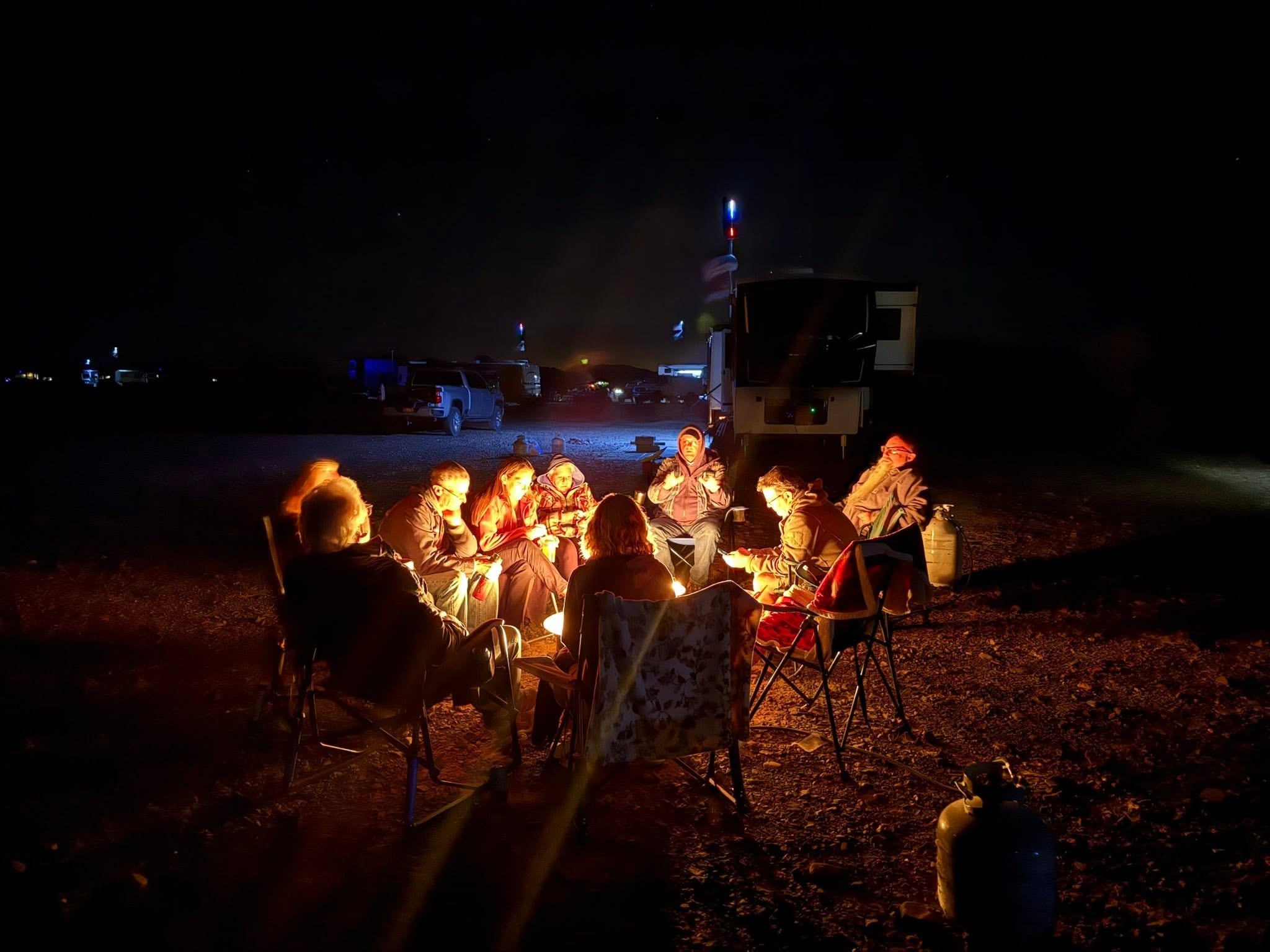
We have a portable propane fire pit. It takes up a significant amount of space. It is a pain to pull out and put back. It sits unused on most trips.
Joe wants it gone. Tina disagrees. So it is still with us.
This is not a unique situation. Every couple who RVs full-time has at least one of these items — the thing that one person insists on keeping and the other person has quietly accepted they will never win. The EZ-up awning was another one. That one eventually made it out the door. Sometimes you get the win, sometimes you don't.
The lesson here is not that you should always purge everything. It is that the conversation itself is worth having, regularly, and with honesty about whether something is earning its space.
The Margaritaville Machine
It sounded perfect. We love a good frozen drink. We were going to be the life of the campground.
Then it arrived. The thing is massive. Nobody ever used it. Cleaning it was a full project. The arc went something like: "This is amazing, we'll be the life of the campground" → "This thing is enormous and nobody even touches it" → "If you want me to bring it, you will use it, and you will clean it" → "Here — enjoy your new-to-you Margaritaville."
And it did. And we do not miss it.
The lesson: just because something sounds like a great idea for RV life does not mean it actually works in practice. The romance of the thing and the reality of the thing are often very different. Give yourself permission to let go of the romance.
The System That Actually Works
About every two to three months, we do a full walkthrough of the entire trailer — usually as part of a deep clean. Every item gets the same question: when was the last time we used this?
Depending on the answer, a few things can happen:
- If it has been used recently, it stays where it is.
- If it has not been used in a while, it gets moved to a less convenient spot — the back of a cabinet, the bottom of a bin. If it still does not get used from there, that tells you something.
- If it has not been used in a year, it migrates to the home garage on our next visit. From there, it eventually makes its way to the trash, a donation, or one of the kids.
The year rule is not perfect, but it is honest. If you have gone through four seasons without touching something, you do not need it.
The Questions Worth Asking
Beyond the year rule, a few other questions have served us well:
Could we buy it locally if we actually needed it? Most things can be sourced within a reasonable drive. The question is not "could we ever need this" but "is the inconvenience of not having it worth the permanent cost of carrying it?"
How many is enough? This one sounds obvious until you count your BBQ lighters. We had eighteen at one point. Eighteen. You need two. Maybe three. The rest are just taking up a drawer.
Do we need service for twelve? We are two people. We occasionally have guests. We do not need flatware and drinkware for a dinner party. Pare it down to what you actually use.
How many throw blankets is an addiction? We are not going to answer that one. But you know who you are.
The Mindset Shift
The hardest part of RV storage is not the physical act of getting rid of things. It is the mental shift from "but what if we need it" to "we will figure it out if we do."
Full-time RV life teaches you, slowly and sometimes painfully, that you are more resourceful than you think. You can improvise. You can buy something locally. You can go without. The things you thought were essential often turn out to be optional, and the things you thought were optional often turn out to be the ones you actually reach for every day.
The rig gets lighter. The drives get easier. The space feels bigger.
LOVING LIFE HAVING FUN — with a lot less stuff than we started with.
Explore Topics
Written by
Joe & Tina Pastore
Content creator and writer sharing insights and stories.